
Cheap Was a Decision. So is This.

By Cory Carman
There’s a lot of discussion about beef right now, thanks largely to the recent decision to remove tariffs on 300,000 metric tons of ground beef from unspecified countries. Consumers are scratching their heads, cattle producers are furious, and the whole thing has opened the door to a larger conversation. Ranchers, comedians and politicians are weighing in, and there’s no shortage of social media posts and reels questioning where this meat is coming from and whether it's even beef.
A lot of the conversation has centered on safety. People are asking what standards were followed, where the animals were raised and what ended up in the meat. I’m confident horse meat isn’t crossing the border, and I don’t believe eating an imported burger will cause anyone to fail a drug test, but I’m glad we’re finally paying attention and asking questions.
Part of the reason these rumors took hold is that we have very little visibility into the beef supply chain. Four companies control roughly 85% of the meat processing market in the US, operating at a scale and speed that’s difficult to grasp. And unlike many other foods, beef doesn't have mandatory country-of-origin labeling. My T-shirt, by comparison, has to tell me where it was made. The same goes for salmon, lamb and tomatoes. Beef was carved out of those regulations in 2016.The beef market is global, and the United States is both the world's largest beef importer and exporter. In a system built this way, price is the attribute that travels reliably through the supply chain. Everything else — how the animal was raised, what it ate, how it was managed, who raised it — is hard to see. And anything that costs without adding value to the commodity gets pushed aside.
We're beginning to understand the cost of cheap food. It solved one problem, but created others: too many empty calories, not enough nutrition, and a food system that has traded resilience for efficiency. That trade-off may have made sense at one point. In the face of climate change, it makes much less sense to me. The good news is that we get to make different choices now.Building a business that lives up to those values has been a two-decade exercise in navigating hurdles and finding ways around barriers. Most years, we’ve just barely made it through because of great partners — retailers, restaurants and chefs who believed in what we’re doing. Along the way, we’ve worked hard to become more efficient and to close the very narrow gap between what it costs to produce good food and what people are willing to pay for it, while making sure the processor, distributor and retailer can make a living, too
One experiment that has worked for us from the beginning is our cow share program. Individuals purchase a share of a cow born, raised and harvested on the ranch, and we arrange for processing and delivery to Portland. The customer saves 25% or more compared with buying the same cuts at retail.I’ve been delivering cow shares Portland and Seattle for 20 years. I know the animal I tagged when it was born, the pastures it rotated through for two years and the steer I stood with when it was harvested. I pick up the cut beef from a processor whose employees I know and where I can walk in any day. And then I watch families and neighbors who bought an entire cow together meet in a parking lot to divide it up, negotiating over cuts, bartering, joking and promising to invite each other over for the last tenderloin or the first burgers.
It’s an old-fashioned way of buying and eating meat: seasonally, one cow at a time, directly from a farm where it was born and raised. It can sound quaint and, to most people, inaccessible. That’s a fair critique. But only if we accept that participating in a huge, consolidated, multinational meat trade is somehow more modern or normal.
There’s the question of convenience, too. And even that depends on how you look at it. From my experience, having a freezer full of meat is far more convenient than going to the store and figuring out what to buy every week.
I don’t want to minimize the very real barriers. Most people don’t have a chest freezer or the ability to buy a side of beef all at once. But I do want to illuminate the alternatives that already exist — ways of buying food that offer a level of transparency the current system can’t. They don’t have to be relics of the past. They can be part of the future. What becomes normal depends, in part, on what we decide to support.I’ve always thought about modern agriculture as a beautiful blend of ancient traditions and modern technology. The art is figuring out where and how to apply each. That can mean using virtual electric fencing and cow collars to mimic grazing patterns that happened millennia ago, the same patterns under which grasslands once thrived. It can mean testing the nutrient density of our beef to understand which plant compounds make their way from the pasture into the meat. It can mean choosing to support a family-run processing plant, buying directly from a rancher, and picking up cardboard boxes of meat in a parking lot, even if you use AI to figure out what to do with a sirloin tip roast.
I am truly grateful to have grown up and lived in an agricultural community. I know so many good people in communities like mine, working incredibly hard to care for the land and their animals. They can read a pasture, sense when an animal is uncomfortable, hold things together through drought, and do whatever it takes to stay on the land. They aren’t hiding, but they are largely invisible in a system that was built for us not to see them.The system that does see them and honors their work is small and largely ad-hoc. Some people have been building it their entire lives. What makes that system grow and evolve into something that works for more people is actually pretty simple: demand.
Every box of beef a rancher sells sends a signal back through the community. It tells the local processor that there’s enough business to invest in capacity. It tells the neighboring rancher that she might be able to sell a few head directly to families in her community. It tells a young person who wants to raise animals that there might be an honest future in doing that work. As producers, we are constantly looking for those signals. We need to know that there is a stable and profitable future before we take on more risk, invest in infrastructure or grow our herds. When the future is uncertain, we do the opposite. We minimize our exposure. We don’t grow.
The more we say yes to that, the more room there is for innovation. And the more we can begin to build and reclaim a food system that works differently.
Are you ready to get started?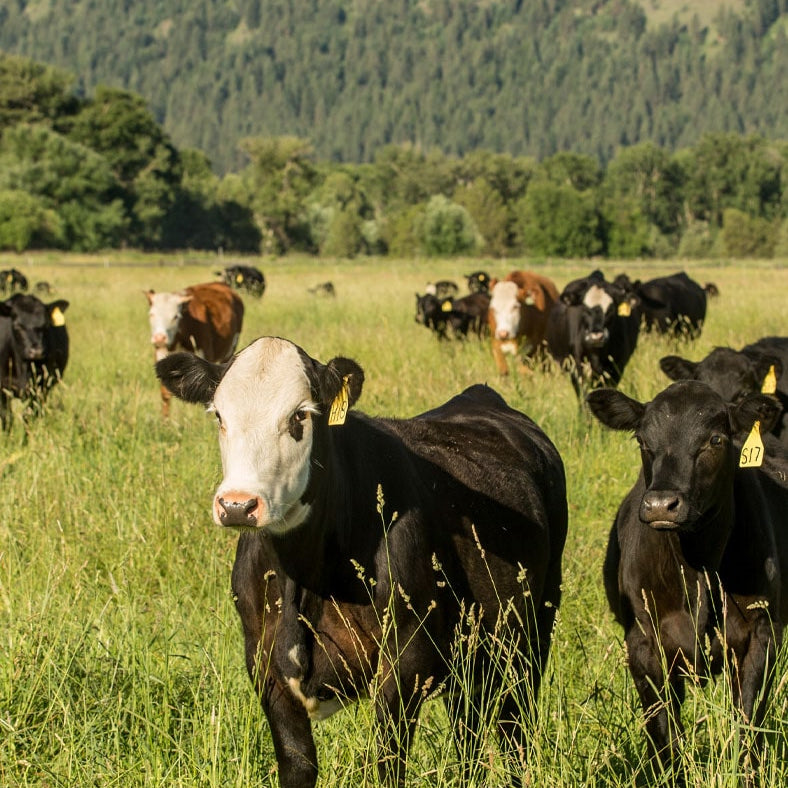

Leave a comment
This site is protected by hCaptcha and the hCaptcha Privacy Policy and Terms of Service apply.